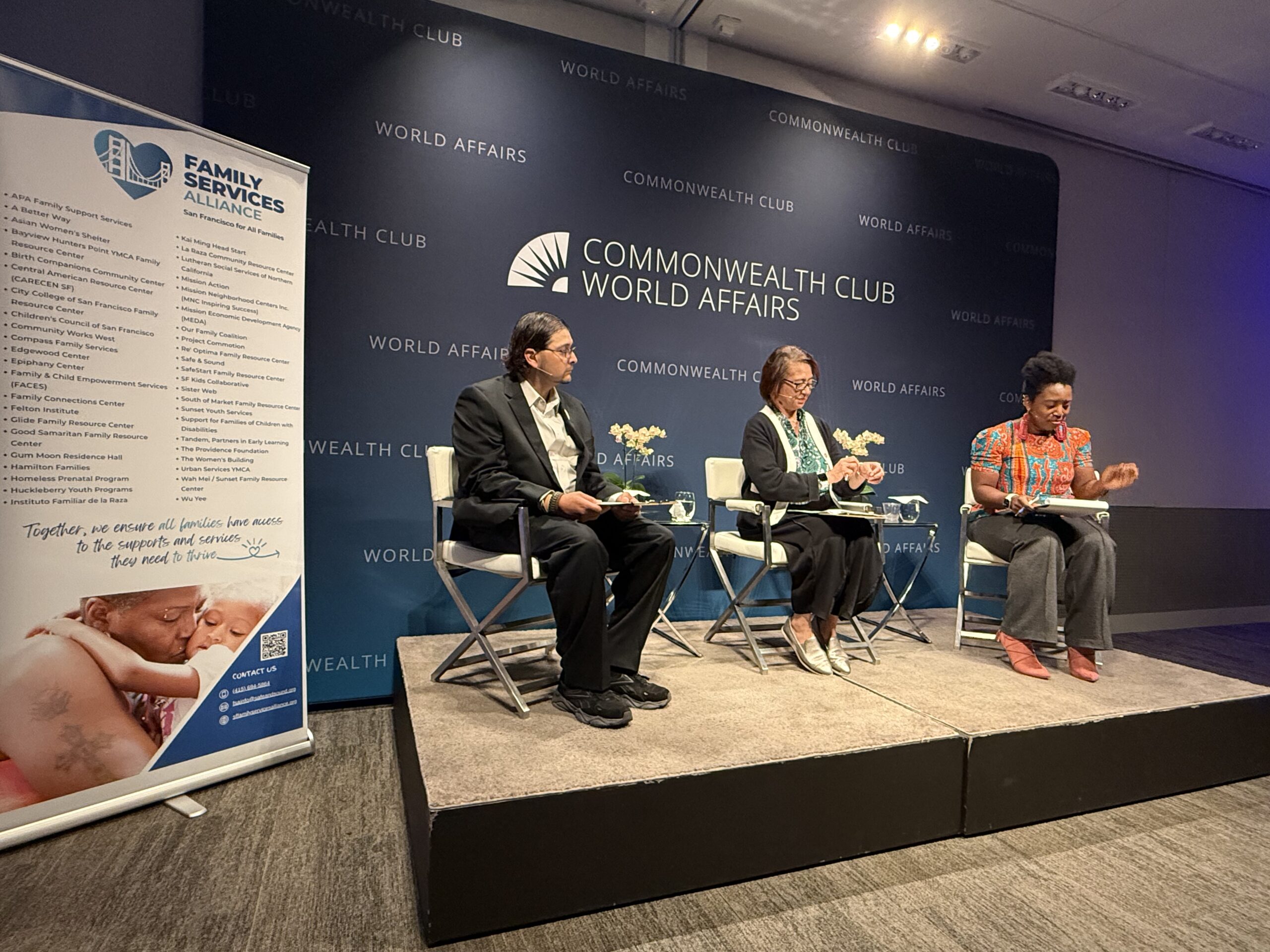
Our Commonwealth Club panel, "What Children Need to Thrive," is now a podcast. Gloria Tan of Gum Moon and parent leader Vicente Milan share how Family Resource Centers give families an open door before a crisis, and why children thrive when families thrive. Listen on Apple Podcasts or wherever you get your podcasts.
Advocacy & Policy
The Family Services Alliance (FSA) uses its collective voice to advocate at the local, state, and national levels on issues that affect children and families and the organizations that support them.
Advocacy in Action
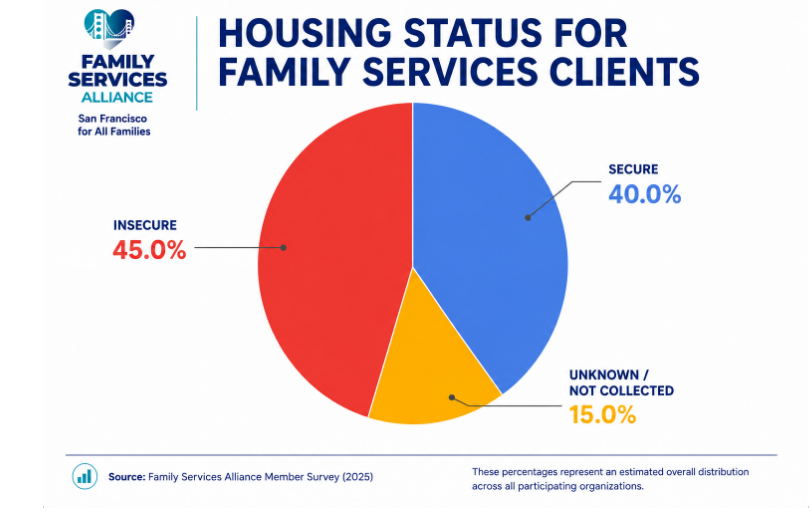
Check out our new blog, which shares new national research showing housing instability as a key driver of child welfare involvement. It connects those findings to what we hear from Family Resource Centers in San Francisco, including our recent demographic study results, and highlights how the City’s new Family Homelessness Addendum recognizes FRCs as key family homelessness prevention spaces. …
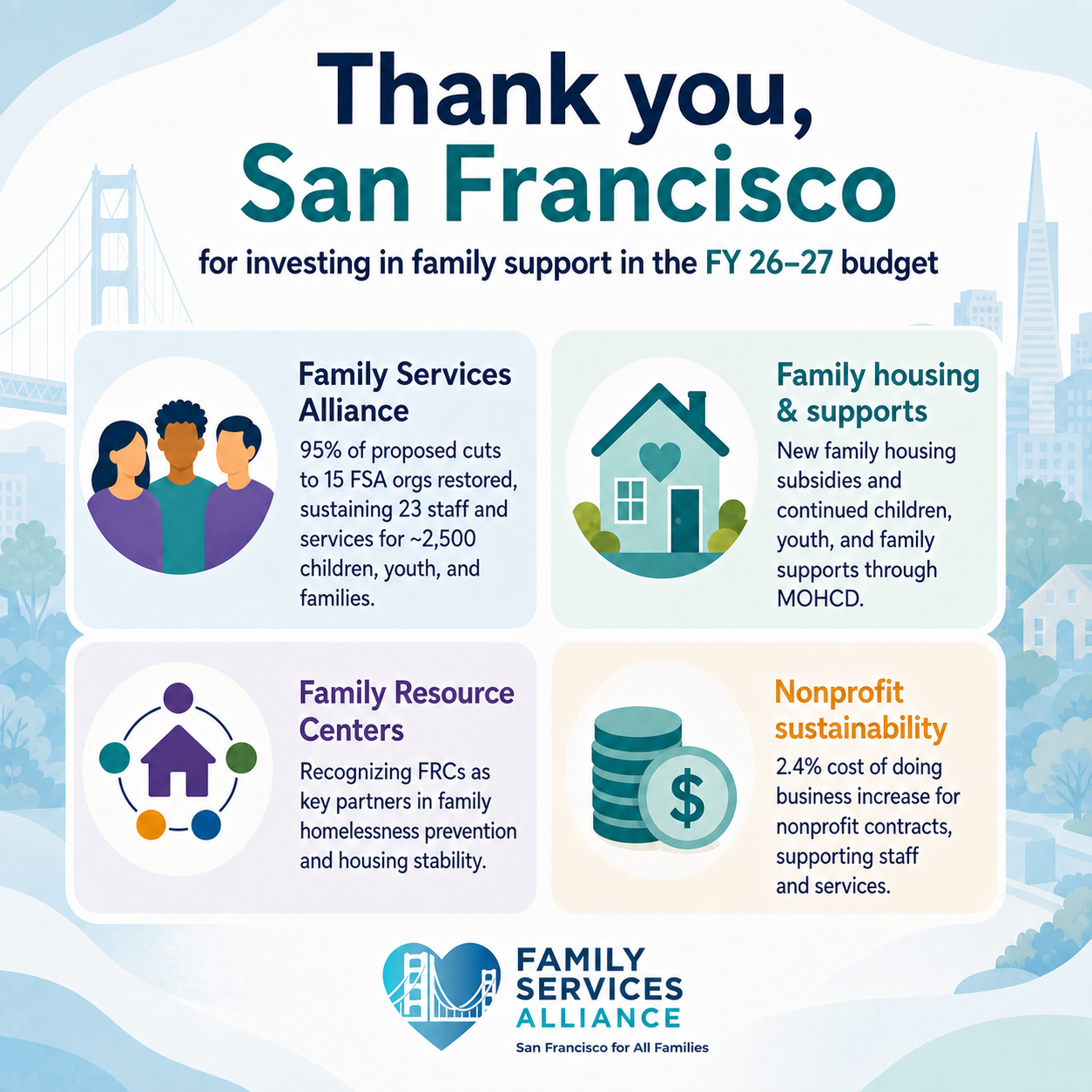
Check out our new blog, Thank You to San Francisco for Investing in our Children, Youth and Families, which shares how this year’s San Francisco FY 2026–2027 budget preserves core funding for children, youth, families, and the nonprofits that support them. It highlights the Family Services Alliance’s role in partnership with City leaders and departments in protecting family support services and strengthening the systems that support children, youth, and families across San Francisco so they can stay here and thrive.
We are thrilled to announce the publication of the Children, Youth & Family Summit: Aligning for Thriving Communities report, summarizing the event which was held on November 7, 2025 at UC Law San Francisco, co-hosted by Family Service Alliance and Prosperity Initiative and funded by Safe & Sound and the Crankstart Foundation. The Summit brought together nearly 350 nonprofit leaders, Mayor Daniel Lurie, Board of Supervisor members, City departments, philanthropy partners, and community members for a first-of-its-kind convening centered on honest, solution-driven conversations about what it takes to better support children, youth, families, and the nonprofit workforce that serves them. The report reflects four key themes and shared solutions that emerged from the day's conversations — read it and share it with your networks! We're planning to host the Summit again in 2026 — reach out to fsainfo@safeandsound.org if you'd like to be involved.
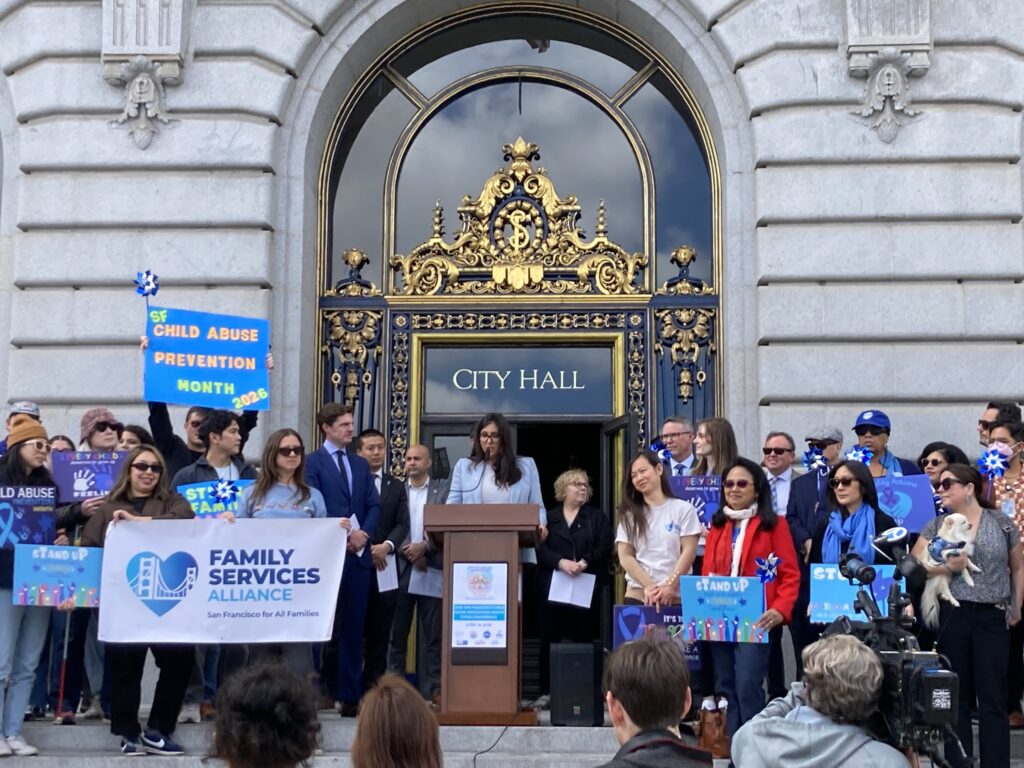
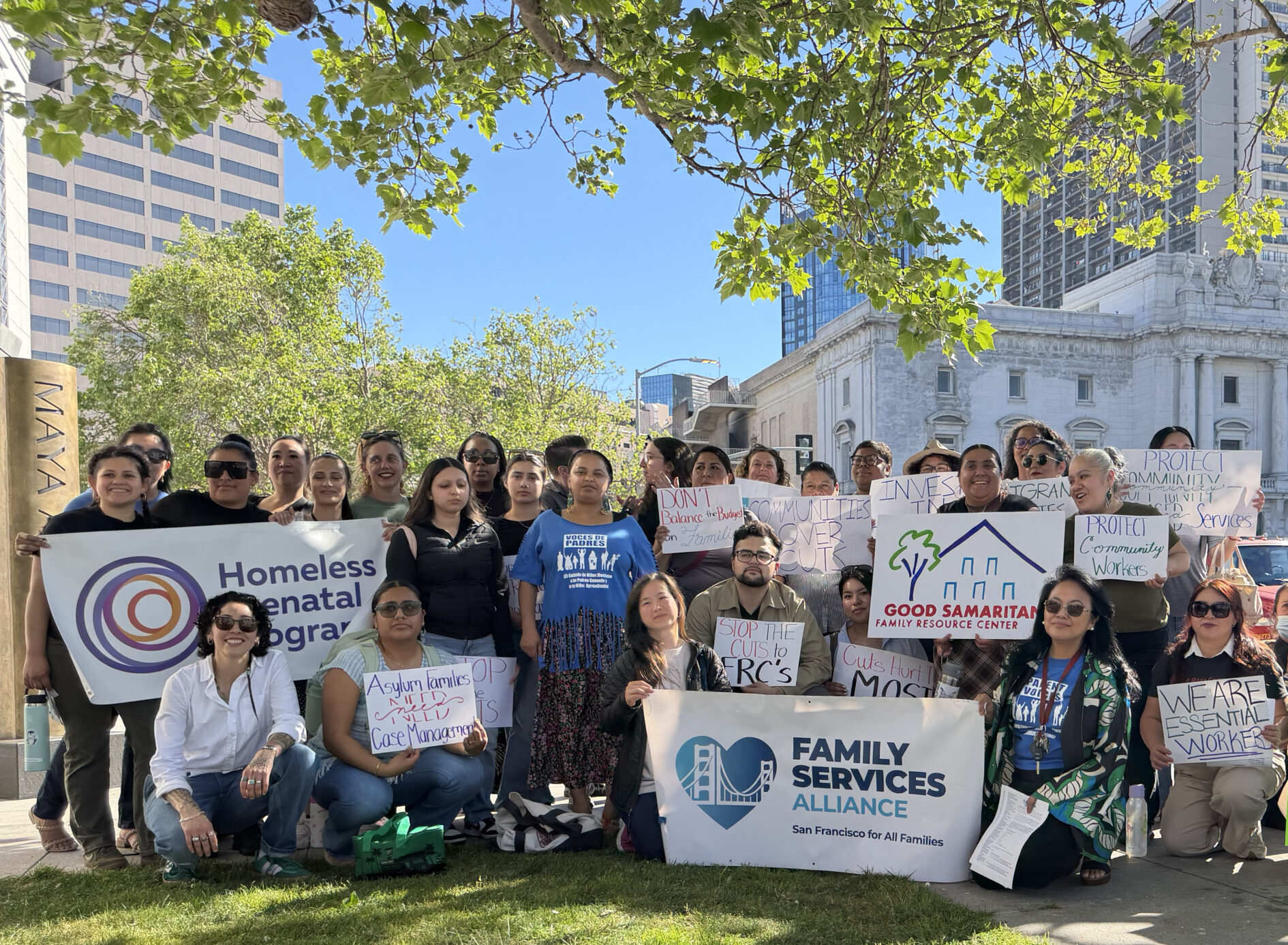
On April 14th, over 70 community members, parent advocates, and city leaders gathered on the steps of San Francisco City Hall to celebrate Child Abuse Prevention Month under the theme "Strong Families, Safe Futures." Seven supervisors joined us, and that same day the Board of Supervisors passed a resolution recognizing April 2026 as Child Abuse Prevention Month that. Parent voices anchored the event. Thank you to everyone who showed up and wore blue. …
Chapin Hall has put together a policy toolkit for advocating for state and federal policies around economic and concrete supports. Included is current evidence that shows the effects of economic instability on child maltreatment and the positive effect of policies that mitigate economic instability for families. …
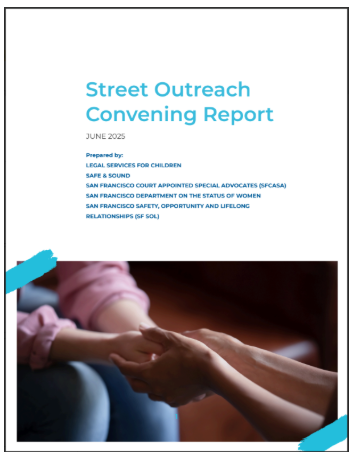
Youth who become disconnected from the child welfare and juvenile justice systems face a high risk of exploitation, especially commercial sexual exploitation, often within just 48 hours of being on the streets. In response, Bay Area service providers convened in October 2023 to develop local strategies for supporting these vulnerable youth, resulting in seven key recommendations grounded in lived experience. This new report outlines these recommendations, the progress made, and the next steps to establish a more youth-centered support system. Check out the full report online to learn how you can help move these efforts forward.
May 2025
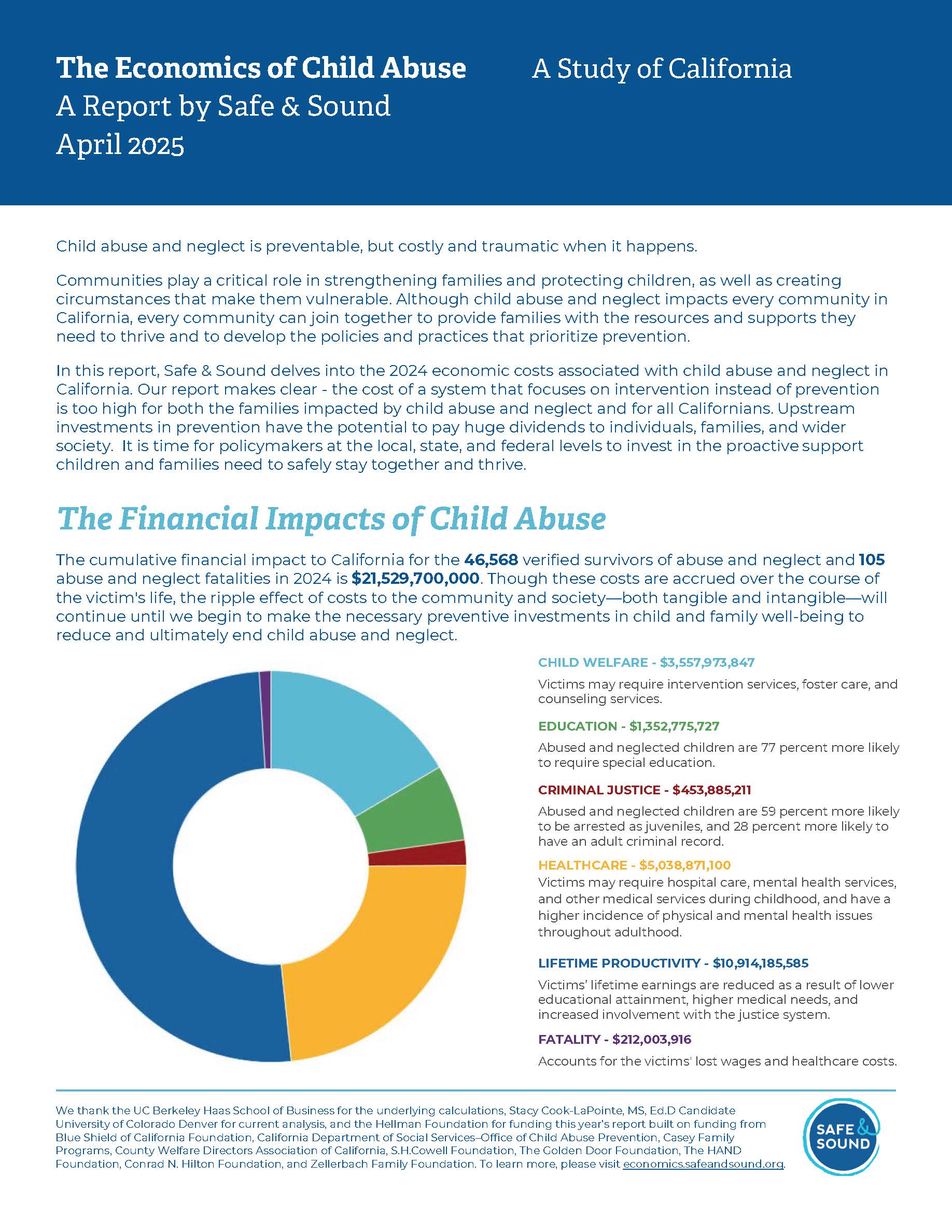
If you are interested to know more about the cost of child abuse and neglect in California, Safe & Sound has published its landmark annual report, showing that child abuse and neglect cost California over $16 billion in 2024. This represents thousands of missed opportunities for prevention. Use the data from this report to see how your county compares to other parts of California to put data behind the need for better prevention services.
…
Drawing data from over 10 city agencies and 27 community organizations, the FY ’22-FY ‘23 report provides insight into family violence in San Francisco. It includes data on the SF Family Resource Center Initiative's role in preventing child abuse and neglect. One of the five recommendations is to “improve and/or maintain access to basic and emergency needs to keep our city’s most vulnerable populations safe and help prevent family violence,” an essential element of family support organizations’ work. The FVC tri-chairs and representatives from MOVR have been meeting with members of the Board of Supervisors as well as the Mayor’s Office to advocate for FVC priorities, including ensuring that the city preserves existing services to prevent family violence.
…
September 2024
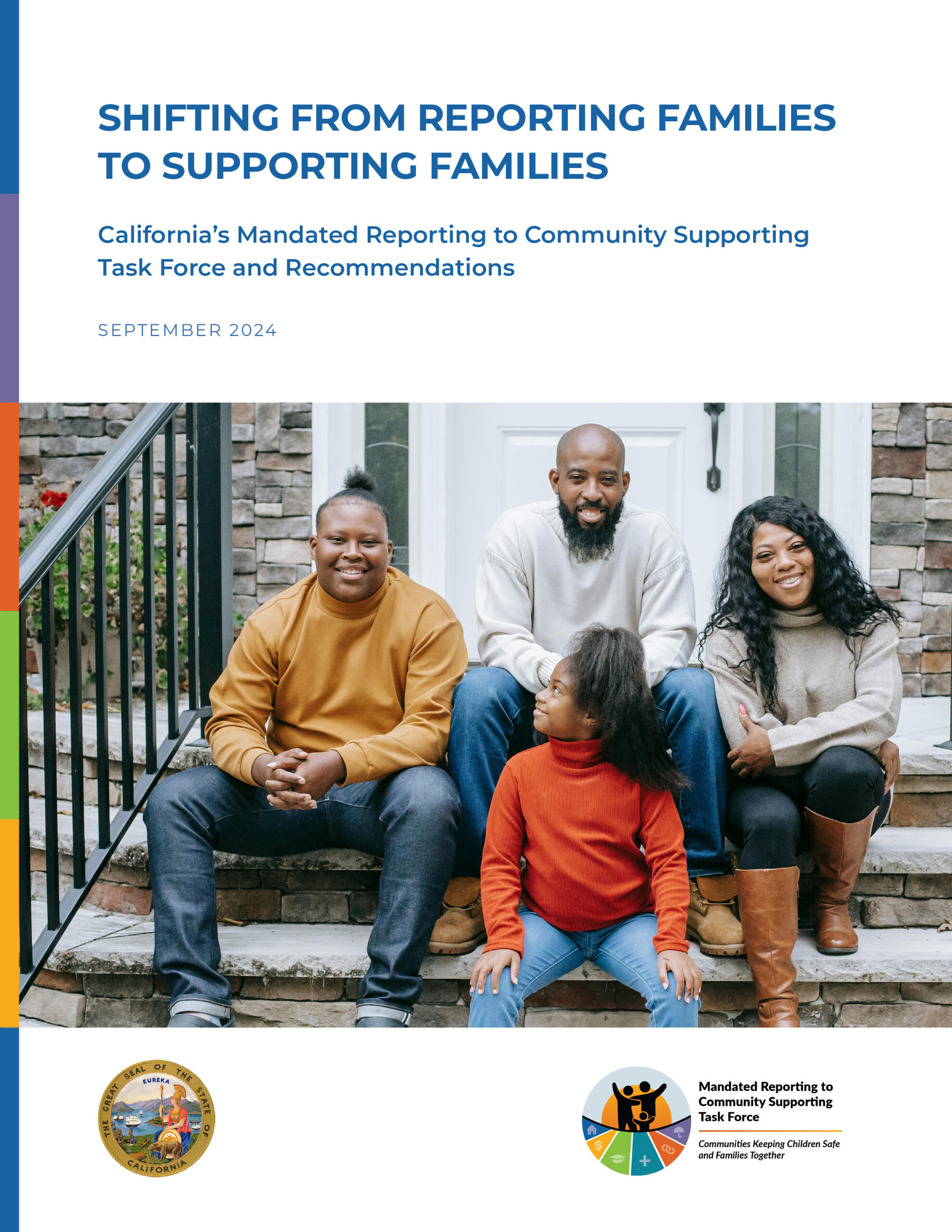
This report provides the data and recommendations for shifting from reporting families to supporting families.
Opportunities to Take Action
Throughout the year, many opportunities arise for members, communities, and families to lift up their collective voices to educate and activate policymakers on what children and families need to thrive. Current opportunities to take action with FSA:

Contact Policymakers
- Find your House representative in the United States House of Representatives
- Find your House representative’s Washington D.C. phone number
- Find your state representative in the California State Legislature
- Find your district supervisor in the San Francisco Board of Supervisors
Make your Voice Heard at a Meeting or Event
The San Francisco Board of Supervisors (SFBOS) holds regular public meetings where residents can voice their opinions on local issues. By attending and speaking during public comment periods, you can share how FRCs have positively impacted your family, highlight the crucial services they provide, and emphasize the need for continued support and funding.
Participate in a Letter Writing Campaign
FSA runs regular letter writing campaigns to advocate for family support organizations and at various levels of government. Check back soon for upcoming letter writing opportunities aligned with FSA’s advocacy and policy platform.
What Guides Our Advocacy?
The FSA’s Policy Platform
FSA may lead efforts to pursue issues and policies that:
-
Build the community safety net for families through efforts to increase capacity, sustainability, and high-quality services of community-based, family support organizations.
-
Enhance the community support network for families and their children through increased collaboration and coordination of community-based and public agencies, alignment of systems, and furtherance of the two-generation approach.
Furthermore, FSA may support efforts to pursue issues and policies that:
-
Reduce poverty and improve economic stability, prioritizing basic needs for children and families.
-
Enhance access to healthcare and improve mental, emotional, and physical health.
-
Improve school readiness and access to opportunities to address educational inequities.